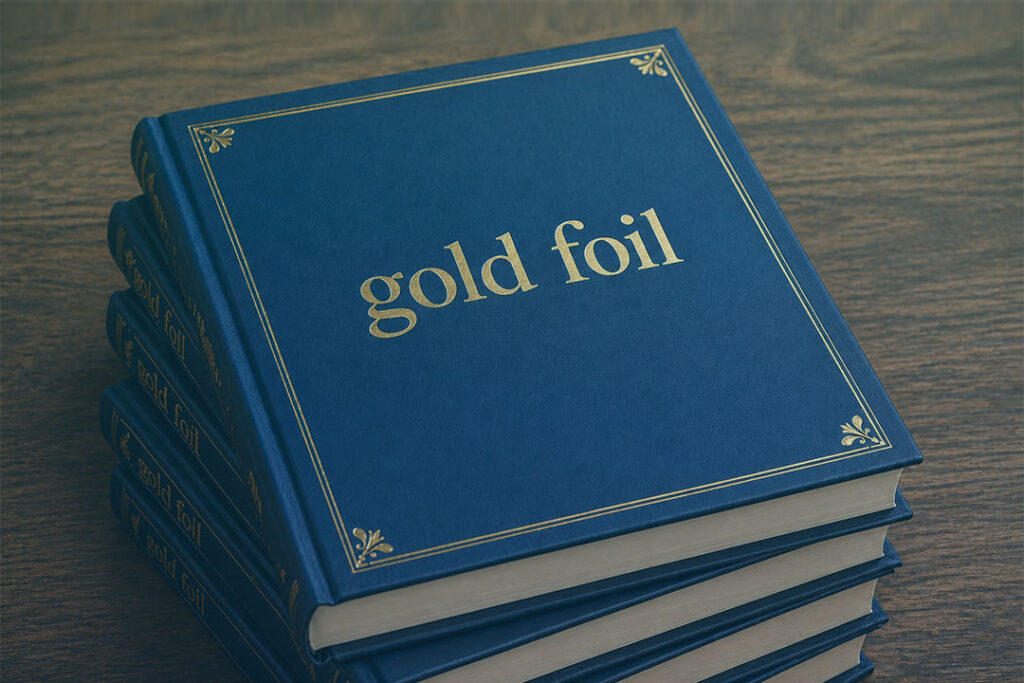
Hardbound book printing is where most people either get it right or completely miss it. The pages can be perfect, the design can be solid, but if the cover feels cheap, the whole book drops in value.
You see it all the time. Two books with similar content. One feels like a retail product. The other feels like a print job.
If you are investing in custom book printing, especially in bulk, finishes like foil stamping, embossing, and lamination are not extras. They decide how your book is judged before anyone reads a single page. If you are still weighing up formats, it is worth comparing options in this guide on hardcover vs paperback book printing.
Why Finishes Matter in Hardbound Book Printing
The cover does the selling. Contrary to the popular phrase, books are actually judged by their cover!
If your book is going into a bookstore, sitting in a warehouse, or being shipped to customers, the first thing anyone notices is how it looks and feels in their hands.
A plain printed cover might save you a bit upfront. But if you are printing 5,000 copies and they look average, that is 5,000 missed opportunities.
We have seen clients upgrade a cover finish and suddenly the same book feels like it belongs in Dymocks instead of sitting in a storage box.
That is the difference.
Foil Stamping: Clean, Sharp, and Noticeable
Foil stamping is one of the simplest upgrades you can make, and one of the most effective.
It is done by pressing metallic foil into the cover using heat. That is why it holds its shape and does not fade like standard ink.
Most commercial jobs use it for the title and spine. Gold on a dark cover is common. Silver works well on lighter tones. You keep it minimal so it stands out.
Once you start adding borders, patterns, or too much foil, it can look cheap. The best results are usually the simplest.
On a bulk run, the cost difference is smaller than most people expect. On something like 5,000 units, it can add only a small amount per book but completely change how the product feels. If you want a deeper breakdown, this article on how bulk book printing reduces cost per unit explains it in more detail.
Embossing and Debossing: Where Texture Comes In
Embossing is what gives a cover that raised feel. You run your hand over it and the title or logo sits slightly above the surface.
It is usually only a millimetre or so, but you notice it straight away.
Debossing goes the other way. It presses the design into the cover instead of raising it. More subtle, but it works well for a clean, understated look.
This is common in photography books, brand books, and higher-end corporate material. Instead of printing a logo flat, it is pressed into the cover. It feels more permanent.
A good example is a training manual printed in a hardbound format for a national company. The content might be standard, but an embossed logo on a faux cloth cover makes it feel like a proper publication, not just internal paperwork.
You can also combine embossing with foil stamping. That is when the foil sits on a raised surface. It is a small detail, but it is the kind of thing you see on books that sell well in retail.
Lamination: Not Just for Looks
Lamination is often treated as an afterthought. It should not be.
If you are printing in bulk and shipping across Australia, your books are going to be handled, stacked, and moved around. Without protection, covers get scratched quickly.
Matte lamination or soft-touch matte-velvette lamination are the most common for hardbound book printing. A soft feel and does not reflect light. Most premium books use it.
Gloss lamination is brighter. Colours stand out more, but it can feel a bit more commercial. It works well for bold designs or marketing-driven books.
There is also a practical side. Matte lamination hides minor scratches better. Gloss shows everything, and can be a fingerprint magnet, especially over dark print.
If you are sending 10,000 books to a warehouse, that choice matters more than people realise. For more on print durability standards, you can refer to Print & Visual Communication Association Australia.
Combining Finishes for a Retail-Ready Result
The best covers usually use more than one finish.
A common combination is a matte laminated cover, embossed title, and foil stamping on top. You get texture, contrast, and visibility in one design.
This is what you see in most retail books. It is not overdone. It is layered in a way that feels intentional.
For clients printing books for Amazon or national distribution, this is usually the level you want to hit. The book needs to compete with everything else on the shelf. If you are planning distribution, this guide on printing books in Australia for international distribution is worth reading.
Even in corporate settings, the same applies. If you hand someone a well-finished book, it changes how they view the content inside.
Choosing the Right Finish for Your Project
Not every book needs every finish.
If you are printing 10,000 copies of a 300-page manual, you might focus on durability. Matte lamination and a simple embossed logo can be enough.
If you are producing a smaller run of premium books for retail, you can go further. Foil, embossing, textured materials.
The real decision comes down to how the book is being used.
We have worked with clients printing large runs for Amazon where the goal is to hit a certain price point while still looking retail ready. In those cases, you balance cost per unit with perceived value.
A small change in finish can lift the product without blowing out the budget.
That is where experience in book printing services in Australia makes a difference. It is not just about what looks good. It is about what works at scale. You can also explore the full bulk book printing guide here.
Bulk Production and Consistency
Everything looks good on a sample. Bulk production is where things get tested.
If you are printing thousands of copies, every detail needs to line up. Foil needs to hit the same spot every time. Embossing needs to be consistent across the run.
This is where cheaper setups fall apart.
We have seen jobs where the first few samples look perfect, then the rest of the run drifts slightly. It does not sound like much, but across 5,000 books it becomes obvious.
With hardbound book printing at scale, you need proper quality control. Not just at the start, but throughout the run.
For special finishing, Mint Printing Australia works as a national print partner, sourcing through established specialised trade suppliers and managing production across different hubs.
That setup allows for large runs, consistent output, and delivery across Australia without relying on a single facility. You can view more about the approach here.
Final Thoughts
Finishes are not decoration. They are part of the product.
If you are investing in hardbound book printing, especially in bulk, the way your book feels in someone’s hands matters just as much as what is printed inside.
A well-finished book stands out. It looks like it belongs in retail. It holds up during shipping. It reflects your brand properly.
If you are planning a project and want to get it right the first time, speak to a team that understands both the production side and the commercial side of custom book printing.Mint Printing Australia works with businesses, publishers, and organisations across the country to produce high-quality books at scale. If you need reliable book printing services in Australia and want a product that looks and feels right, request a quote here and get the process started.