A lot of businesses learn the hard way that overseas book printing is not always cheaper once the job is actually moving.
The quote looks great at the start. Then the freight bill changes. A shipment sits at port for three weeks. The books finally arrive and the colours are slightly off compared to the approved proof. Now the launch date is getting pushed back and somebody has to explain why 8,000 catalogues are still sitting in customs.
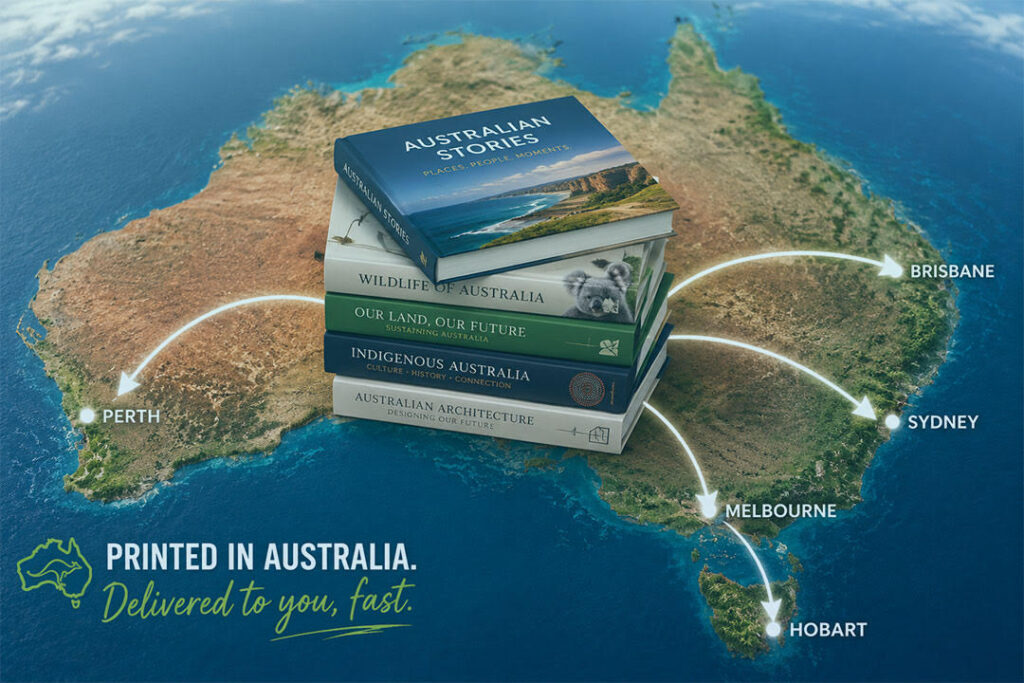
That’s one of the main reasons more companies are choosing Printing Books in Australia instead.
Local printing gives you more control over the process. It usually means faster turnaround times, easier communication, and fewer nasty surprises once the books are produced. If you are printing training manuals, product catalogues, corporate reports, or large quantity booklets, the team at Mint Printing Australia handles these types of commercial projects every day.
Printing Books in Australia cuts delivery times dramatically
Freight delays are one of the biggest problems with offshore printing.
A business ordering 10,000 books from overseas is not just waiting for the printing itself. You are waiting for sea freight, customs clearance, container unloading, local transport, and warehouse processing before the books even reach your door.
If one part of that chain slows down, everything slows down.
We’ve seen businesses miss conferences because brochures were still sitting on a ship somewhere off the coast. We’ve seen retail launches pushed back because containers arrived two weeks late. That becomes expensive very quickly when staff, venues, or advertising campaigns are already booked.
Printing locally removes most of that risk.
If your books are being printed in Australia, the turnaround is simply easier to manage. Reprints move faster too. If something changes halfway through production, you can usually fix it before it becomes a major problem.
That matters for businesses doing regular commercial print runs.
A training company rolling out 5,000 manuals across Sydney, Melbourne, Brisbane and Perth does not want to gamble on international freight timelines. Neither does a retailer waiting on stock before a product launch.
Businesses comparing local and offshore production can also read The Complete Guide to Bulk Book Printing in Australia for a deeper breakdown of timelines, logistics, and print run planning.
Quality problems are easier to catch locally
This is where a good local printer earns their money.
A lot of offshore print jobs look fine in a digital proof. Then the final shipment arrives and things start standing out immediately. Covers feel thinner than expected. Blacks print slightly grey. Laminate scratches too easily. The binding glue is weak on thicker books.
You normally do not notice those issues until thousands of copies are already printed.
Working with a book printing company in Australia makes quality control much easier because communication is faster and physical samples are easier to review properly.
If you need adjustments, they can usually happen quickly.
That is especially important for hardcover books, case bound books, and retail ready products where presentation matters. A coffee table book sitting in Dymocks needs to feel premium the second somebody picks it up. If the spine cracks after two uses or the cover stock feels flimsy, customers notice straight away.
If you are weighing up different binding and cover options, Hardcover vs Paperback Softcover. Which Book Printing Option Is Best? explains the differences in more detail.
The same applies to corporate printing.
A national company handing onboarding manuals to new staff does not want cheap looking books falling apart after a month. It reflects badly on the business itself.
Local printing gives you more flexibility during production
Large print jobs almost never stay perfectly unchanged from start to finish.
Quantities go up. Delivery locations change. Somebody updates artwork at the last minute. A client suddenly wants shrink wrapping added halfway through production.
If your books are already on a ship from overseas, you are stuck.
Printing locally gives you far more room to move.
One overseas client Mint works with regularly prints survival manuals for the Australian market. These are large 300 to 400 page books produced in runs of 10,000 to 20,000 units at a time. The books are distributed through Australian warehouses and online retail channels.
They could print elsewhere. Instead, they chose Australian production because freight delays and inconsistent quality overseas were creating too many problems for local distribution.
That is becoming more common.
Businesses selling through Amazon Australia, retail chains, training networks, or franchise groups often prefer local printing because reorders are easier and stock arrives faster.
You can also read Printing Books in Australia for International Distribution to understand why more overseas companies are choosing local Australian production.
A local book printer in Australia is easier to deal with when deadlines matter
This sounds obvious until something goes wrong.
If a shipment is delayed overseas, you are often dealing with long email chains across different time zones while customers are asking where their books are.
That gets frustrating quickly.
Working with a local team means you can usually pick up the phone and sort things out properly. You are talking to people who understand Australian freight timelines, local delivery networks, and how commercial print jobs actually move around the country.
It also saves businesses from constantly chasing updates themselves.
A lot of Mint’s clients are already managing enough pressure internally. Marketing teams are organising launches. Operations staff are coordinating training rollouts. Retail businesses are trying to keep shelves stocked.
They do not want to spend half their week tracking containers and arguing over freight schedules.
For businesses preparing larger commercial runs, Commercial Book Printing for Training Manuals & Corporate Publications covers the process in more detail.
Cheap offshore printing often becomes expensive later
People compare print quotes without looking at the full picture.
The unit price might look lower overseas. Then freight costs jump halfway through the job. Customs fees get added. A delay forces you to pay rush shipping somewhere else in the process. Or worse, the books arrive with quality problems and the whole run has to be redone.
That happens more than people think.
For a business spending $20,000 to $80,000 on a large print run, reliability usually matters more than shaving a few cents off each copy.
That is why many commercial buyers prefer local production once their order volumes increase.
A reliable delivery date is valuable. So is knowing the books will actually look the way they are supposed to.
The Australian Government’s Australian Border Force website also gives businesses a clearer idea of how customs and freight processing can impact imported shipments.
Printing Books in Australia also makes sense for international companies
Some of Mint Printing’s larger clients are based overseas but sell directly into Australia.
Instead of printing everything centrally and shipping containers worldwide, they print locally for the Australian market. It shortens delivery times, reduces freight risk, and makes local distribution much easier.
That approach works particularly well for:
Training manuals
Retail books
Amazon inventory
Corporate publications
Product catalogues
Instruction manuals
If books are being warehoused and distributed inside Australia anyway, local production often ends up being the cleaner option operationally.
Businesses planning larger runs can also read How Bulk Book Printing Reduces Cost Per Unit before deciding on final quantities.
Choosing the right Australian book printer
Not every printer handles large commercial work properly.
Some printers are built for small retail orders. Others struggle once quantities start moving into the thousands.
If you are printing books commercially, you want a printer that understands freight coordination, bulk production, national distribution, premium finishing, and repeat ordering.
Once you are moving pallets instead of boxes, experience starts to matter.
Mint Printing works with businesses across Australia needing everything from training manuals and catalogues through to large scale retail book orders and commercial bulk printing.
Whether you need 250 books or 20,000 plus units, the goal stays the same. Produce books that arrive on time, look professional, and hold up properly once they are in customers’ hands. If you are planning a commercial print run and want a reliable local partner, you can request a quote from Mint Printing for your next bulk book printing project.