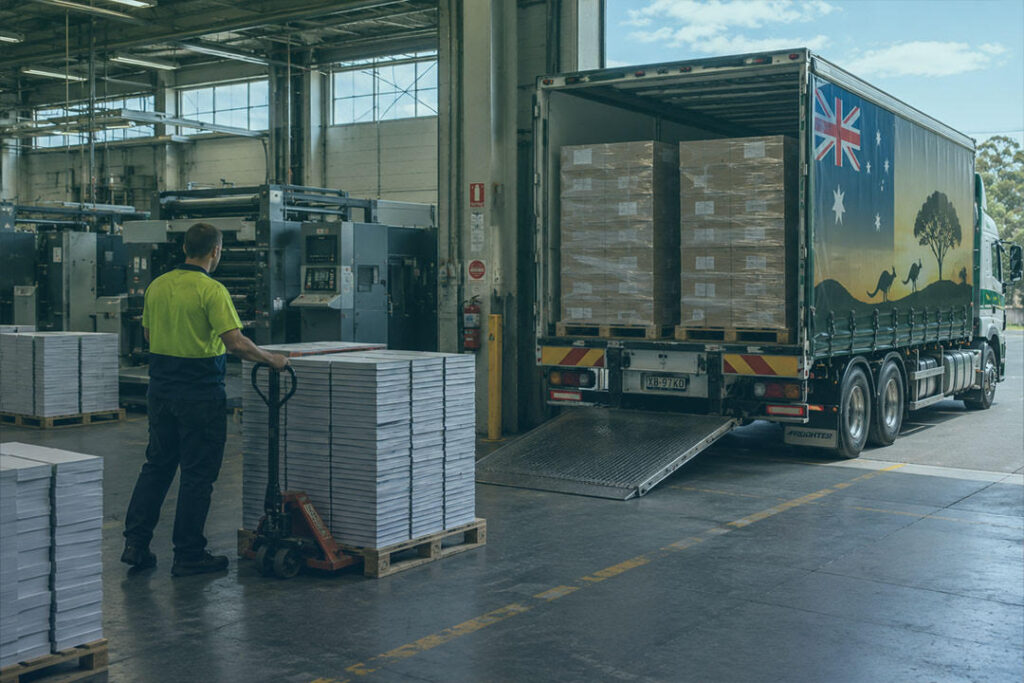
A hardcover book can look incredible on a screen and still turn up completely wrong once 5,000 copies land at a warehouse.
That happens more often than people think.
The PDF proof looked perfect. Then the covers arrived warped because the board stock was too thin. Or the spine text shifted slightly because the page count changed late in production. Or the cartons were packed badly and half the shipment turned up with crushed corners after freight.
That is the difference between printing a few books and producing retail ready stock at scale.
Hardcover Book Printing is a different process once your books are heading into bookstores, Amazon fulfilment centres, distributors, gift shops, or national retail chains. At that point, you are not just buying ink on paper anymore. You are managing freight, durability, presentation, warehousing, and consistency across thousands of copies.
That is why businesses looking for hardcover book printing in Australia usually stop chasing the cheapest quote pretty quickly.
Why Hardcover Books Still Sell in Retail
Paperback books are fine for plenty of projects.
Retail is different.
If somebody is spending $60, $90, or $150 on a photography book, art book, collector edition, or premium publication, they expect it to feel solid the second they pick it up. Weight matters. Cover rigidity matters. Even the sound the cover makes when it opens matters more than most people realise.
You see it constantly in bookstores.
Customers pick up the hardcover first. They flick through it. They feel the stock. They look at the finish under the lights. Half the buying decision happens before they read a single word.
That is why hardcover books still dominate categories like:
- Photography books
- Art books
- Premium self published books
- Corporate publications
- Luxury catalogues
- Gift books
- Educational manuals
- High end retail releases
A flimsy paperback can make a great product feel cheap. A properly made case bound book immediately feels more valuable.
Hardcover Book Printing Gets More Complicated Fast
People outside the industry usually think hardcover books are just paperbacks with thicker covers.
They are not.
Once you move into larger retail runs, small production mistakes become very expensive. A spine calculation being 2mm off does not sound dramatic until 8,000 covers have already been printed. Then suddenly the barcode wraps around the spine edge and the whole job has to be reworked.
That is real money.
The same goes for board thickness, grain direction, glue strength, laminate choice, endpapers, carton packing, and freight handling. A small 50 copy run can hide problems. A 10,000 copy run exposes all of them.
We have seen businesses learn this the hard way after printing offshore with suppliers they never properly spoke to. Everything looked fine in the proof. Then the books arrived with bubbling laminate, weak hinges, inconsistent colour, or covers separating after a few weeks on shelves.
That is usually the moment price stops being the only thing they care about.
Businesses comparing hardcover vs paperback book printing often realise pretty quickly that retail distribution puts far more pressure on durability than standard short run printing.
What Retail Distributors Actually Care About
Retail distribution changes once books start moving through warehouses instead of sitting in your office.
Nobody at a warehouse cares whether your book looks nice on your laptop screen. They care whether 12 pallets arrive on time, barcode correctly, survive transport, and match the previous print run sitting in storage.
That means the production side matters.
Colour Consistency Across Large Runs
This matters heavily for photography books, branded publications, and illustrated books.
If the first 3,000 copies are slightly warmer in colour than the next 3,000, retailers notice. Customers notice too.
Large commercial runs need controlled colour management from start to finish. Especially when books are being reprinted months later and still need to match the original release.
Freight and Warehouse Durability
Books are heavy. Really heavy.
A 300 page hardcover book printed in bulk can push pallet weights into the tonnes very quickly. Poor packing creates problems fast. Split cartons. Bent corners. Crushed spines. Torn laminate.
Most customers never think about carton strength until a freight company stacks another pallet on top during transport.
Then suddenly 2,000 damaged books become your problem.
Retail Ready Finishing
Retail books often need:
- ISBN barcode placement
- Shrink wrapping
- Carton labelling
- Pallet configuration
- Specific carton quantities
- Distribution ready packaging
A lot of smaller printers simply are not built for that side of the process.
Book Printing in Australia Versus Printing Offshore
People ask this question constantly.
Yes, overseas printing can sometimes reduce unit pricing on paper. But freight delays, customs issues, communication problems, and inconsistent quality can wipe those savings out very quickly.
That is one reason many businesses now prefer local book printing in Australia, especially for ongoing retail distribution.
One Mint Printing client based in Romania prints large quantities of books locally for Australian and New Zealand distribution rather than shipping containers from overseas. Their books are delivered directly into Australian warehousing after production.
Companies selling into Australia often want somebody local handling production, freight coordination, and quality control on the ground instead of trying to manage problems from the other side of the world.
Especially once deadlines become tight.
For ISBN requirements and barcode standards used in Australian retail distribution, publishers can also refer to the official Thorpe Bowker ISBN Agency.
Choosing the Right Finish for Hardcover Book Printing
The right finish depends entirely on what the book is actually for.
A photography book displayed in a gallery gift shop needs a very different feel compared to a corporate training manual being shipped around Australia.
Some of the more common options include matte laminate, gloss laminate, cloth binding, foil stamping, spot UV, and sewn binding.
Matte laminate is popular for premium retail books because it feels softer and reduces glare under store lighting. Gloss laminate tends to make colours punch harder, which works well for bold retail covers. Sewn binding is often worth the extra cost on heavier books because the spine holds up far better over time compared to cheaper adhesive only methods.
This is also where cheap production shortcuts become obvious.
You can spot weak board stock immediately once somebody holds the book. The cover flexes too easily. The spine creases too quickly. Corners soften after a few weeks of handling.
A retail customer might not understand printing terminology, but they absolutely notice quality.
Bulk Hardcover Printing Changes the Numbers
This is where commercial printing starts making far more sense financially.
Printing 200 hardcover books is expensive. Printing 5,000 changes the economics completely.
Setup costs spread across the run. Freight becomes more efficient. Packing becomes faster. Production workflows smooth out properly.
That is why businesses selling through retail channels usually move toward larger consolidated print runs once demand becomes stable.
A company shipping 10,000 books into Amazon fulfilment works on completely different margins compared to somebody manually ordering 100 copies every couple of months.
Businesses researching how bulk book printing reduces cost per unit usually discover very quickly that larger commercial runs create far better long term value than constant small repeat orders.
Those are the jobs serious commercial printers actually want.
Hardcover Books Are Not Just for Publishers
A lot of commercial hardcover work has nothing to do with traditional publishing.
Some of the biggest runs are actually business projects.
Training organisations print onboarding manuals. Property developers print premium investor books. Franchises print operational guides. Large companies print annual reports and internal publications in surprisingly high quantities.
We have also seen strong demand from:
- Photographers
- Artists
- Architects
- Corporate marketing teams
- Education providers
- Product brands
- eCommerce businesses
Anybody wanting their product to feel premium usually leans toward hardcover production eventually.
Especially once the books are heading into retail distribution.
Businesses printing manuals and educational publications at scale often also explore commercial book printing for training manuals and corporate publications as part of their broader print strategy.
Choosing a Printer That Can Actually Handle Retail Distribution
Plenty of printers can produce a decent looking sample copy.
Handling a national retail rollout is a different skill set completely.
Large scale hardcover book printing in Australia involves production scheduling, freight coordination, pallet management, warehousing requirements, reorders, and quality consistency across entire runs.
You notice pretty quickly which printers have actually handled large retail jobs before.
Most online budget printers are built for quick transactions. Upload the file. Pay online. Receive the parcel.
That works fine until you start shipping pallets instead of parcels.
Once books are moving through warehouses, distributors, Amazon fulfilment, retail stores, or national delivery networks, the operational side matters just as much as the print quality itself.
Businesses planning larger retail runs often start with The Complete Guide to Bulk Book Printing in Australia to understand production planning, freight, and scaling properly.
Hardcover Book Printing Done Properly
Retail books have to survive more than the printing press.
They need to survive freight companies, warehouse handling, bookstore shelves, customer handling, and repeat reorders months later that still need to match the original run properly.
That takes planning from the start.
Mint Printing Australia works with publishers, businesses, authors, training providers, artists, and commercial clients needing reliable hardcover book printing in Australia for retail distribution, national delivery, and large scale production runs. Whether you need 250 books or 20,000 plus, the focus stays the same. Strong production quality, consistent finishes, and books that still look good after they leave the warehouse.If you are planning a hardcover release and want realistic advice on production, freight, finishes, or bulk pricing, contact Mint Printing Australia for a quote.